

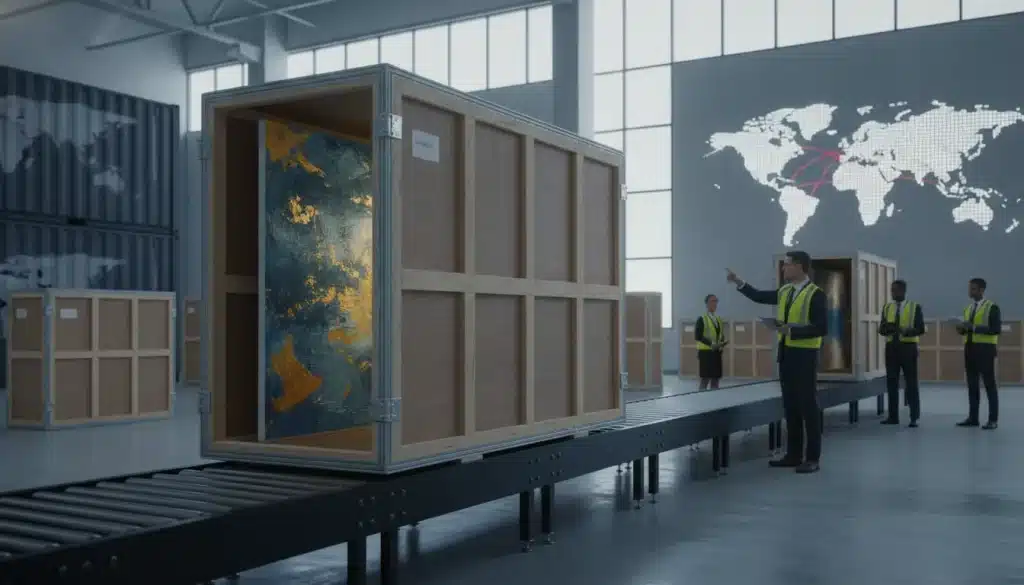
A favorite painting or family heirloom can be difficult to replace, so sending it overseas calls for more than sturdy boxes and a shipping label. The artwork’s size, materials, condition, and value all affect how it should be packed and transported. Customs forms, permits, duties, and delivery arrangements can add further steps, especially when several carriers handle the shipment. This guide breaks down the process into practical questions you can ask before committing to a provider. Learn what international art shipping and moving services may include, how to prepare your pieces, and how to clarify insurance, costs, and storage. A little preparation can help keep your artwork’s journey organized and its care front and center.
Key Takeaways
- Match the shipping plan to each piece: Provide accurate details about artwork, its condition, destination, and schedule so the mover can recommend appropriate packing and transport.
- Verify protection and paperwork: Ask for written details on handling, customs documents, insurance coverage, shipment updates, and delivery procedures.
- Compare itemized quotes: Check whether packing, crating, transport, customs costs, storage, and final delivery are included, and clarify any exclusions before booking.
What Do International Art Shipping Services Include?
International art shipping involves more than moving a piece from one address to another. A complete plan considers the artwork’s materials, condition, size, value, destination, and the route it will travel. A framed painting, a sculpture with delicate details, and an antique may each need different packing, equipment, and handling procedures. The shipper should discuss these needs with you before setting a schedule or preparing a quote.
Services may include an initial assessment, protective packing, crating, transport, customs coordination, delivery, and temporary storage. Not every shipment requires every service, so ask what is included and who handles each step. If you’re moving your household or business at the same time, coordinating the artwork’s transport with the rest of the move can help keep plans clear. Transit Moving Systems provides international moving and specialized transport services, with storage options for customers who need extra time before delivery.
Before booking, share accurate details about the artwork and the delivery location. Ask about the route, handling procedures, paperwork, insurance, and any services that may cost extra. Written answers make it easier to compare providers and understand how the artwork will be cared for from pickup through delivery.
Compare air, sea, road, and hand-carried transport
The right transport method depends on the artwork, destination, budget, and schedule. Air freight may suit time-sensitive shipments, while sea freight can be an option for larger pieces or collections when a longer journey is acceptable. Road transport may connect locations across borders or carry artwork to and from a port or airport. For certain high-value or delicate pieces, a courier may accompany the shipment if the provider offers that service.
Ask the mover to explain the route, estimated transit time, transfer points, and safeguards at each stage. Air shipments, for example, need packing designed to withstand repeated handling and changing transit conditions. Amerijet’s guide to shipping artwork by air outlines some of the considerations involved. Compare transport options based on the piece’s needs, not transit time alone.
Assess artwork, plan handling, and pack it to fit
A careful shipment starts with an assessment. The mover should record the artwork’s dimensions, weight, materials, construction, and current condition. They can then identify vulnerable areas and plan how to lift, carry, load, and position it. A glass-fronted painting, a sculpture with delicate protrusions, and an antique with a fragile finish call for different handling plans. Share details about existing damage or past repairs before packing begins.
Even minor impacts or unsuitable packing can cause scratches, cracks, tears, or paint loss. The Museum Exchange guide to shipping fine art explains why careful handling matters throughout transit. Ask who will handle the piece and what equipment or protective materials they plan to use. Taking photos of its condition before packing also gives you a useful reference at delivery.
Use custom crates, cushioning, moisture barriers, and export-compliant materials
Some artwork can travel safely with protective wrapping, while larger, fragile, or high-value pieces may need a custom crate. Depending on the item and route, packing may include surface protection, cushioning to limit movement, corner guards, and moisture barriers. Materials should suit the artwork: for instance, a sensitive painted surface needs a covering that will not stick to or abrade it.
Crates must also stand up to handling during transfers between vehicles, ports, or aircraft. International shipments may have rules for wood packaging, so confirm requirements before construction begins. Doma Shipping’s overview of international fine-art shipping covers protective packing, crates, and export considerations. Ask what materials the provider will use and whether the crate is designed for your artwork and its planned journey.
Prepare customs paperwork and manage permits, duties, and taxes
Cross-border shipments need accurate paperwork. Depending on the artwork, route, and countries involved, documents may include an inventory, value declaration, proof of ownership, export declaration, or permits. Certain antiques and culturally significant works may face additional rules. Requirements vary, so confirm them with your mover and the relevant authorities before the artwork is collected.
Duties, taxes, and processing fees can affect the final cost, and missing or incorrect documents may delay clearance. Shipedge explains how international shipping can involve customs procedures and added costs. Ask who prepares and submits each document, what information you need to provide, and which charges are included in your quote. Get these responsibilities in writing so you know who to contact if customs requests more information.
Arrange door-to-door delivery, storage, and unpacking
Door-to-door service may cover collection, packing, export handling, customs coordination, final delivery, and unpacking. Confirm which tasks are included, and ask whether the crew will place the artwork in a specific room or remove packing materials. At delivery, agree on who will receive the piece and how its condition will be checked. Clear instructions help the team complete the handoff as planned.
Temporary storage may be useful if customs clearance, renovations, or installation plans affect your move-in schedule. Ask how the artwork will be protected and whether the facility can accommodate its handling or environmental needs. Transit Moving Systems offers storage services that can be coordinated with moving arrangements. For larger collections or complex deliveries, Crown Fine Art describes transport services for individual works and collections. Confirm the services, delivery arrangements, and any added charges before booking.
How Do International Art Movers Protect Artwork?
International art moves involve more than getting a piece from one address to another. Artwork may pass through several carriers, customs checks, and storage facilities, so protection depends on careful handling at every stage. Before booking, ask the mover to explain how the team will pack, transport, document, and insure each piece.
Train crews to handle paintings, sculptures, antiques, and fragile materials
Different artworks need different handling. A framed painting may need protection for its surface and corners, while a sculpture may have delicate projections or an uneven center of gravity. Antiques can also have loose joints, brittle finishes, or existing repairs that require extra care.
Share each item’s dimensions, materials, condition, and handling instructions before moving day. Ask who will pack and carry the pieces, and how the crew will manage transfers between vehicles or facilities. For fragile or high-value items, confirm whether custom packing, crating, or specialist handling is available. Fine-art providers such as Fine Art Shippers describe services that include trained art handlers and crate-building capabilities. Transit Moving Systems also offers specialized moving services for items that need additional attention.
Secure loads, manage climate, track shipments, and coordinate transfers
Impact, vibration, heat, cold, and changes in humidity can all put artwork at risk. Ask how each piece will be secured inside the vehicle and whether the transport plan includes air-ride suspension, climate controls, or temperature and humidity monitoring. These details can be especially important for paintings, photographs, wood, and textiles.
International shipments may involve several carriers, terminals, or customs points. Ask who is responsible for the artwork at each handoff, how its location will be tracked, and what happens if a transfer is delayed. Some art transport providers use climate-controlled vehicles, shipment tracking, and alarms, as Crown Fine Art describes. Confirm which protections apply to your shipment, since equipment and monitoring can vary by route and service.
Document condition with photos and clear delivery procedures
Photograph each piece before packing. Take clear images of the front, back, sides, frame, and any existing marks or damage. Keep these photos with your inventory and shipping paperwork, and ask the mover to record the condition of each item before it is packed. This gives you a useful reference if you need to report damage. Amerijet recommends photographing artwork from every angle.
Set delivery expectations before the shipment leaves. Confirm who can accept the artwork, where it should be placed, and whether unpacking or installation is included. At delivery, inspect each piece and its packaging before signing the receipt. Note visible concerns, take photos, and ask the mover how quickly you must report damage and which documents to submit.
Review insurance coverage, exclusions, and claims procedures
Standard moving coverage may not fully protect valuable artwork. Request the insurance terms in writing, then check how each item is valued, which events are covered, and whether the policy excludes certain materials, packing methods, or parts of the journey. Coverage may differ during storage, road transport, air freight, and ocean freight, so confirm that it applies from collection through final delivery.
Before booking, ask how to file a claim, what the reporting deadline is, and what evidence you’ll need. Keep your inventory, photographs, valuation documents, receipts, and signed shipping records together. For high-value pieces, ask whether separate transit insurance is appropriate and whether you need to declare each item’s value in advance. DOMA Shipping explains considerations for insuring fine art in transit. Clear written terms help you understand your coverage and next steps if an item arrives damaged or goes missing.
What Affects International Art Shipping Costs?
International art shipping costs depend on the artwork, its route, and the services needed to protect and deliver it. Before comparing estimates, share accurate details about the piece and ask each mover to explain what the price includes.
Consider distance, destination, route, and transport method
Distance affects fuel, labor, and transit time, but the destination and route matter too. Delivery to a major city with regular transport connections may cost less than delivery to a remote area requiring extra road travel or multiple transfers. Routes with limited service or additional border procedures can also affect the price.
Transport method is another factor. Air freight is generally faster, while sea freight may suit larger shipments with more flexible timelines. Road transport may cover a regional journey or the final leg of a longer route. A guide to art shipping costs gives a broad range of €80 to €400 for shipping a painting, with larger or higher-value pieces sometimes costing more than €1,000. Use these figures as general context, not a quote for your shipment.
Assess artwork size, weight, value, materials, and handling needs
Size and weight affect crate dimensions, packing materials, and the space an artwork takes up in transit. Some freight providers also consider shipment volume, so a large, lightweight piece may cost more to transport than its weight alone suggests. Provide measurements that include the frame and any existing packing.
The artwork’s value, materials, and condition help determine the handling and protection it needs. A framed painting, sculpture, and antique may each require different supports or packing methods. Unusual shapes, fragile surfaces, or special lifting needs may call for specialist packing and trained handlers. Artwork shipping guidance explains why fine art needs more planning than standard cargo. Share any condition concerns and handling instructions before requesting an estimate.
Account for packing, crating, customs charges, insurance, storage, and final delivery
Professional packing and custom crating add to the shipment cost, but the right protection helps reduce the risk of damage. Depending on the artwork and route, the mover may recommend cushioning, moisture barriers, or export-compliant materials. Ask whether packing and crating are included or listed as separate charges.
International shipments can involve customs paperwork, permits, duties, and taxes. Insurance costs depend on the declared value and policy terms, including exclusions and claim requirements. Storage, delivery appointments, limited access, and unpacking can add costs at either end of the move. Review the provider’s moving services to see how art transport can fit with a household or business move. If the artwork needs to wait between destinations, ask about available storage services.
Estimate costs with an itemized quote that lists exclusions
Request a written estimate based on the artwork’s dimensions, weight, value, collection address, destination, and timing. An itemized quote should show separate costs for transport, packing, crating, customs-related services, insurance, storage, and final delivery. Clear line items make it easier to compare providers and understand what drives the total.
Ask what the estimate excludes. Duties and taxes, permits, inspections, waiting time, redelivery, or extra handling may be billed separately. Confirm whether the price is fixed or could change after a survey or customs review. Also ask how the mover will notify you and get approval before adding charges. Route availability and shipment details can affect freight pricing, so reviewing these common shipping cost factors can help you prepare informed questions before booking.
How Do You Choose an International Art Shipping Provider?
Choosing an international art shipping provider takes more than comparing prices. The right company should understand the needs of your artwork, explain how it will be packed and handled, and help you plan for the customs requirements of your destination. Ask how the team will manage each stage, from pickup and packing to transfers and final delivery. Request clear answers in writing so you can compare providers on the same details.
Start by describing the pieces you plan to ship, including their dimensions, materials, value, and any fragile or unusual features. Share your destination, preferred timing, and whether the shipment is part of a household or business move. These details help providers assess the work involved and prepare a more useful quote. If your plans change, ask how the company will communicate updates and whether changes could affect the cost or schedule.
If you’re moving artwork alongside household belongings, a provider with a broad range of moving and storage services may make planning easier. Transit Moving Systems offers international moving and specialized transport services. Use the questions below to assess a provider’s experience, customs support, protection measures, coordination, and pricing before you book.
Check fine-art experience, international moving services, and customer reviews
Ask whether the provider has handled artwork similar to yours in size, material, value, and fragility. Packing a framed painting calls for different considerations than transporting a sculpture, antique, or work with delicate finishes. A capable provider should explain how it will assess your pieces and plan their handling. Companies such as Fine Art Shippers focus on art logistics, which can help you understand what specialist experience looks like.
Confirm that the company can manage the full international route, including any destination partners. Ask which services it provides directly and who is responsible at each handoff. Read recent reviews for recurring comments about handling, communication, timing, and problem-solving. Consistent feedback can offer a more useful picture than one especially positive or negative review.
Confirm customs expertise, documentation support, and written security procedures
Ask who prepares the inventory and shipping documents, and whether the provider can guide you on permits, declarations, duties, and taxes. Requirements vary by destination and artwork, so confirm what applies to your shipment. If you’re temporarily exporting or importing a piece, ask what paperwork may be needed to document its return. Establish which documents the provider will prepare and which you must supply.
Also ask how the company manages customs inspections, transfers, and access to the shipment. Request written procedures for identifying, packing, loading, and monitoring your artwork. Crown Fine Art’s transport services include paperwork support and inspection supervision, examples of assistance you can ask providers about. Before booking, make sure you know who will answer customs questions and resolve issues if an inspection affects the schedule.
Compare insurance, communication, tracking, and claims support
Ask what insurance or loss-protection options are available, what value they cover, and when coverage starts and ends. Review exclusions, including any limits related to packing, storage, loading, or transit. Find out how to report damage or loss, what evidence you’ll need, and the deadline for submitting a claim. Request the relevant terms in writing, rather than relying on a general assurance that your artwork is protected.
Clarify how the provider will keep you informed. Ask who your main contact will be, how often you can expect updates, and whether tracking or status checks are available. Find out how the company will notify you about delays or route changes. UOVO’s transportation information describes client updates, offering a useful reference for questions about shipment communication. Choose a provider whose process and claims steps are easy to understand.
Coordinate art transport with household moves and storage
If you’re moving your home or business at the same time, ask whether the provider can coordinate the schedules, packing, transport, and delivery. Combining services may mean fewer vendors to manage, but your artwork still needs handling suited to its materials and value. Confirm whether the pieces will travel separately from general household goods, how they’ll be identified, and who is responsible for them at every handoff.
Storage can help if your new home isn’t ready or you need time before installing your collection. Ask where the artwork will be stored, what protections are in place, and whether the facility can meet any special handling needs. Transit Moving Systems offers storage services alongside moving services. Before choosing a provider, confirm how it will coordinate storage with international transport, including inventory, access, pickup, and final delivery.
Ask what the quote covers before booking
Request an itemized quote that lists the services and charges, such as assessment, packing, custom crating, pickup, international transport, customs support, insurance, storage, and final delivery. Ask whether duties, taxes, inspection fees, or special delivery requirements are included. Confirm whether the price is fixed or may change after an in-person or virtual assessment, and ask how additional charges will be approved.
Artwork size, weight, value, materials, route, and handling needs can all affect the cost. Convelio’s overview of art shipping costs explains how shipment details can influence pricing. Before you agree, ask the provider to list exclusions and describe what could change the quote. An itemized estimate makes it easier to compare providers and understand the services behind the price.
Frequently Asked Questions
How far in advance should I arrange international art shipping?
Start planning as soon as you know the destination and approximate moving date. This gives you time to arrange an artwork assessment, suitable packing, transport, and any required customs documents. Special crates or permits may require extra preparation.
What information should I provide to get an accurate quote?
Share each piece’s dimensions, weight, materials, condition, and estimated value, along with the pickup and delivery addresses. Include your preferred timing and any special handling or storage needs. Ask for an itemized estimate that identifies exclusions and possible extra charges.
Do I need to handle customs paperwork myself?
That depends on the provider and the shipment. Ask who prepares each document and what information you need to supply. Requirements vary by destination and artwork, especially for antiques or culturally significant pieces, so confirm the rules before pickup.
Does moving insurance automatically cover my artwork?
Not necessarily. Ask for the coverage terms in writing, including the covered value, exclusions, claim deadline, and whether protection applies during storage and every part of transit. Keep photos, valuation records, and shipping documents in case you need to make a claim.
Can I store artwork if my new home is not ready?
Yes, temporary storage can help if your delivery or installation plans change. Confirm how the artwork will be packed and protected, what storage conditions are available, and how pickup and final delivery will be coordinated. Transit Moving Systems offers storage services that can be arranged alongside moving services.