

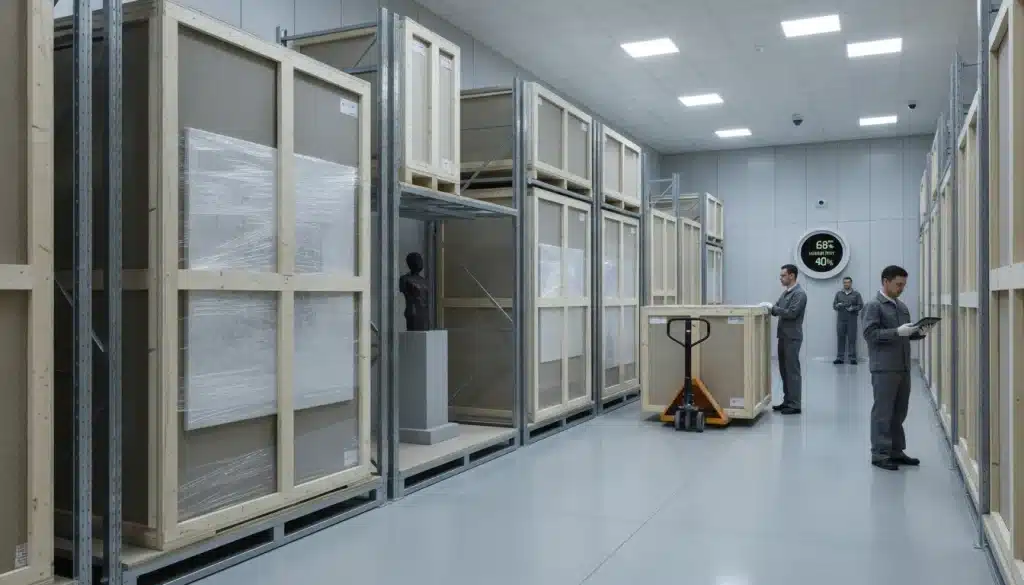
A painting can look sturdy on the wall, but moving and storing it takes careful planning. Frames can crack, surfaces can scratch, and delicate materials may react to changes in their surroundings. That’s why fine art storage services often involve more than setting aside a unit. Packing, transport, storage conditions, inventory, access, and coverage all deserve attention. Before choosing a provider, consider what your collection needs and what you should ask before signing an agreement. Whether you’re moving, renovating, or making room for new work, understanding each step can help you protect your art and plan with greater confidence.
Key Takeaways
- Choose storage based on the artwork: Share each piece’s materials, size, condition, and handling needs so the provider can recommend suitable packing and storage.
- Compare the full service and cost: Request itemized pricing and written details about access, inventory records, security, and coverage.
- Coordinate storage with your move: Prepare an inventory and confirm who will pack, transport, store, and return each piece.
What Do Fine Art Storage Services Include?
Fine art storage can involve more than keeping artwork in a secure location. Depending on the provider and your collection, services may include packing, transport, storage, inventory records, and arranged access. Ask what is included in your quote and what may cost extra, so you can plan each step from pickup to retrieval.
Store paintings, framed works, sculptures, and more
Fine art storage may accommodate paintings, framed works, sculptures, and collections with pieces of different sizes. The storage plan should account for each item’s dimensions, materials, condition, and handling needs. A framed painting may need a different setup from a freestanding sculpture or a delicate mixed-media piece.
Ask how the provider will store your artwork, whether individual protection is needed, and how the facility handles large or unusually shaped items. Art Work Fine Art Services describes storage for works ranging from small paintings to large sculptures. If you’re planning a move as well, explore Transit Moving Systems’ services to discuss how storage may fit into your plans.
Pack, crate, handle, transport, and provide access
Depending on the provider, fine art services may include packing, custom crating, loading, transportation, and scheduled access to stored pieces. Ask who handles each step and whether the same team oversees transport and storage. Skilled handlers assess how an artwork should be lifted, protected, and moved, rather than applying the same approach to every piece.
Confirm which packing materials and methods are appropriate for your artwork. The Atelier 4 guide to art transportation and storage explains why professional art handling calls for training and careful risk assessment. Ask how much notice you’ll need to access an item and whether retrieval, delivery, or installation can be arranged.
Track inventory, document condition, and review coverage options
A detailed inventory helps you confirm which pieces are in storage and keep useful records of your collection. Ask whether the provider records identifying details, photographs each item, or prepares a condition report before handling. These records can help you check for changes and clarify an artwork’s condition at key points in the process.
Before signing an agreement, review available coverage options, what they apply to, and how to report a concern. Terms vary, so check limits, exclusions, and documentation requirements. The Museum Exchange overview of fine art storage notes that services may include inventory management, packing, crating, and transportation. Request a written breakdown of what your quote covers, and ask about Transit Moving Systems’ storage services when discussing your needs.
How Do Fine Art Storage Services Protect Artwork?
Fine art storage is about more than finding a secure room. The right provider considers each piece’s materials, condition, and handling needs, then uses appropriate environmental controls, packing, security, and procedures. Ask how these protections work in practice and what they mean for your artwork.
Maintain stable temperature and humidity, monitor conditions, and send alerts
Temperature and humidity changes can affect materials such as canvas, wood, paper, and paint. Fluctuations may cause materials to expand or contract, while excess moisture can contribute to mold or other damage. Stable conditions help reduce these risks, though the ideal range can depend on the artwork.
Ask how the facility controls and monitors its environment, how often staff check conditions, and what happens if readings fall outside the facility’s set range. Some providers can send alerts when conditions change. Fine art storage providers explain how climate control helps limit exposure to damaging environmental shifts.
Shield artwork from light, dust, moisture, and other risks
Artwork needs protection from more than temperature changes. Dust, light, moisture, and accidental contact can also cause damage, so packing should suit the piece. A framed painting may need corner protection and a fitted crate, while a sculpture may require custom supports to keep it from shifting.
Ask whether the provider assesses each item before packing and whether it can coordinate crating and transport. Packing materials should protect the surface without pressing on delicate areas or trapping moisture. Art storage guidance recommends wrapping and crating artwork to help protect it during storage and handling.
Secure access with surveillance, alarms, and fire- and water-protection measures
A suitable facility should control access to storage areas and explain how it protects artwork from theft and emergencies. Ask who can enter, how access is recorded, and what procedures apply when you or an authorized person requests an item. Find out whether the facility uses alarms and surveillance, and how staff respond to alerts.
Ask about protections against fire, leaks, and water damage, too. Security and emergency measures vary, so request clear details about how the facility would respond to a problem. Some specialized providers describe using CCTV and intrusion alarms as part of their security plans.
Plan for emergencies, document condition, and set handling procedures
Before storage, photograph each piece and note its condition, including existing marks or damage. Make sure the inventory identifies each item clearly. Agree on who may handle or access the artwork, how retrieval requests work, and how the provider will contact you if an incident occurs.
Ask whether the team records condition when items are packed, moved, or released, and what steps it follows if equipment fails or an emergency affects the facility. Careful handling matters because mistakes can cause lasting damage, as fine art transport specialists explain. If storage is part of a larger move, explore Transit Moving Systems’ storage services and ask how storage can be coordinated with packing and transport.
What Should You Look for in a Fine Art Storage Provider?
A suitable provider should be able to explain how it will protect your specific artwork, from the first packing step to storage and return delivery. Ask clear questions, review the written terms, and make sure the proposed services fit your collection and timeline.
Hire trained handlers who use art-safe packing materials
Ask who will pack and move your artwork, what experience they have, and which materials they use. Paintings, works behind glass, sculptures, and delicate frames need different kinds of support. Improper wrapping or packing can damage a surface, trap moisture, or put pressure on a vulnerable area. For example, Colorado Art Services explains why plastic wrap can harm oil paintings.
Before booking, find out whether the provider can pack artwork on-site, build custom crates, and handle oversized or unusually fragile pieces. Ask how each item will be labeled and moved, and who is responsible at each stage. Clear procedures help prevent confusion during packing, loading, storage, and delivery.
Choose storage methods suited to each artwork and material
Artwork can respond differently to changes in temperature, humidity, light, and handling. Canvas, works on paper, photographs, wood, metal, and sculpture may each need specific care. Ask how the provider assesses your collection and whether it can recommend storage based on the materials, condition, and sensitivity of each piece.
For valuable or fragile work, ask whether separate or independently controlled spaces are available and what protections they provide. Some facilities use dedicated environmental controls and emergency procedures for sensitive collections, as outlined in this guide to art storage and preservation. Share each piece’s dimensions, materials, condition, and care instructions before storage begins. This gives the provider useful information to plan appropriate handling and storage.
Review access rules, service limits, and insurance terms
Confirm how much notice you need to view or retrieve an item, whether visits are supervised, and whether retrieval, handling, or redelivery comes with additional fees. Ask what types, sizes, and conditions of artwork the provider accepts, and whether packing, transport, and storage are included in the quoted service.
Read the written coverage terms rather than assuming a general policy fully protects your collection. Ask what valuation details are required, which events are covered, and whether exclusions or deductibles apply. Fine-art protection can include specific coverage options and procedures to reduce risk during transport and storage. Atelier 4 outlines art loss protection and logistics considerations. Request a written record of the services, fees, and responsibilities you agree to.
Ask how the provider monitors conditions, tracks inventory, and responds to incidents
Ask how often temperature and humidity are checked, whether monitoring is continuous, and what staff do if conditions move outside their target range. A provider should be able to describe its process for spotting and reporting problems. Some facilities monitor temperature and humidity around the clock, as explained in this overview of climate-controlled fine art storage.
Find out how the provider records each item, documents its condition, and manages inventory. Ask whether you’ll receive an item list or condition report, and what steps the team takes after water intrusion, fire, or damage during handling. If storage is part of a move, review Transit Moving Systems’ storage services and ask how packing and transport can fit your collection’s needs and schedule.
How Much Do Fine Art Storage Services Cost?
Fine art storage costs depend on the space your collection needs, the care each piece requires, how long you store it, and which services your provider includes. Compare the full cost, not just the storage rate.
See how size, quantity, storage method, and duration affect cost
Providers may base storage fees on the space artwork occupies, the number of pieces, or the type of storage required. A large sculpture may need more room and careful handling, while a framed painting may require protective materials and stable conditions. Climate-controlled storage or a dedicated space can also affect the rate.
As a general reference, Museum Exchange reports that specialized art storage in New York City may cost around $1 to $3 per cubic foot. Rates vary by location and provider, so use this figure as an example, not a standard estimate. Ask whether short-term and long-term storage have different rates. Museum Exchange’s guide to art storage also notes that handling charges can add substantially to the total.
Account for packing, crating, transport, access, and coverage fees
Storage is only one part of the potential bill. Packing, custom crating, pickup and delivery, installation, and requests to access or retrieve pieces may carry separate fees. Ask which materials and handling services are included, and whether the quote covers each step from pickup through storage.
Check coverage terms for packing, transport, and storage. Standard freight coverage may not reflect an artwork’s financial or cultural value, so confirm what protection applies and whether you need separate insurance. Atelier 4 explains art-specific protection options. If you’re planning a move as well, ask whether Transit Moving Systems can coordinate art handling, transport, and storage.
Compare itemized quotes and service limits
Request a written, itemized quote that separates storage, packing, crating, handling, transport, access, and coverage costs. Check whether each charge is monthly, one-time, or billed another way, and ask which services are optional. Comparing the same line items across providers makes it easier to understand what you’re paying for.
Then review the service limits behind the price. Ask how the provider documents condition, tracks inventory, handles access requests, and responds to damage or emergencies. Confirm what the coverage excludes, who is responsible for packing and transport, and whether any extra fees could apply. Services vary, so get the agreed care, costs, and responsibilities in writing before booking.
How Does Professional Art Storage Compare With Self-Storage?
Self-storage may suit sturdy artwork that you can pack, move, and check on yourself. Professional art storage is more tailored to the needs of individual pieces, with attention to handling, storage conditions, security, and records. To choose between them, consider the artwork’s materials, size, condition, value, and how long it will be stored.
Compare art-specific care with general storage conditions
A general storage unit may offer a clean space, but it may not provide conditions suited to sensitive artwork. Paintings, photographs, works on paper, and mixed-media pieces can be affected by changes in temperature and humidity, as well as by light, dust, and moisture. Ask how a facility monitors its environment and what steps it takes if conditions change.
Professional art storage can tailor storage methods to the pieces in a collection. As Colorado Art Services explains, sensitive materials may need more than a stable environment. When comparing providers, ask which safeguards are available and whether they fit your artwork. A facility’s climate-controlled label alone may not tell you how closely conditions are monitored or whether they suit your pieces.
Compare professional handling and packing with managing artwork yourself
With self-storage, you’re responsible for packing each piece, choosing materials, moving it, and placing it safely in the unit. That may be manageable for some artwork, but unsuitable wrap, a poor fit, or careless handling can damage a frame or surface. Large, fragile, or unusually shaped pieces may also be difficult to move without help.
Professional handlers can assess how artwork should be wrapped, supported, and transported. Some pieces may need custom packing or crating for added protection. Before booking, ask who will handle the artwork and which materials they use. Transit Moving Systems provides packing and moving services that may be coordinated with storage. Discussing the full move and storage plan in advance can help limit unnecessary handling.
Compare provider-managed security and records with your own arrangements
A self-storage facility may have gated entry, cameras, or unit locks, but ask what those features cover and what remains your responsibility. You’ll also need to keep your own inventory, photographs, condition notes, and access records. These details can help you locate a piece, review its condition, or provide information if you need to make an insurance claim.
A professional provider may have documented intake procedures, controlled access, and records to help track items during storage. Confirm what security measures are in place, who can access the storage area, and whether a condition report is prepared when artwork arrives. Ask how to request access and how much notice is required. Review the provider’s storage services and confirm which options are appropriate for artwork.
Understand why climate control and insurance alone may not prevent damage
Climate control can help limit temperature and humidity changes, but the term doesn’t explain how conditions are monitored or whether they suit your artwork. A piece can still be damaged by poor packing, light exposure, water, rough handling, or improper placement. Ask how the facility tracks conditions and what it does if a problem occurs.
Insurance matters, but it doesn’t prevent damage, and policies may include limits, exclusions, or documentation requirements. Before storing artwork, confirm what coverage applies, what information you need to provide, and how claims are handled. For valuable or fragile pieces, consider the entire plan: packing, transport, storage conditions, security, records, and access. Compare those details with what you can arrange and manage yourself.
How Can You Choose and Prepare for Fine Art Storage?
Match storage and transport plans to the artwork and timeline
Create an inventory before contacting a storage provider. Include each piece’s dimensions, materials, frame or base, current condition, and any known sensitivities. A framed painting, a sculpture, and a work on paper may need different packing and storage arrangements. Note how long you expect to store the collection and whether you’ll need access to particular pieces.
Plan transport alongside storage, especially for fragile, oversized, or long-distance moves. Ask how each work will be assessed, packed, lifted, and moved. These steps call for trained handling, not guesswork, as Atelier 4 explains. Share your inventory and schedule early so the provider can discuss an approach suited to your artwork and timeline.
Ask about condition reports, handling procedures, and access
Ask whether the provider documents each item’s condition when it arrives and whether you’ll receive a copy of the report. Clear records can help distinguish existing marks from changes noticed later. Find out how the provider labels and tracks each piece, who handles it, and what procedures staff follow when placing items into or removing them from storage.
Clarify how access works. Do visits require an appointment? How much notice is needed to retrieve a specific work? Ask what safeguards the facility uses and how staff respond to an incident. Colorado Art Services’ overview describes the layered protections used in professional art storage. Use it as a guide for questions, then confirm which measures your prospective provider offers.
Confirm coverage, fees, and responsibilities before booking
Request a written, itemized estimate that separates storage from services such as packing, crating, pickup, delivery, retrieval, and special access. Ask whether fees depend on the artwork’s size, the space it occupies, or the storage period. Comparing quotes with the same details makes it easier to see what each provider includes.
Before signing, discuss coverage for loss or damage. Ask what options are available, what valuation information is required, and whether exclusions or limits apply. Confirm who is responsible for packing, condition reports, and transport arrangements. Some fine art providers offer protection options designed for artwork, as Atelier 4 notes. Review the written terms carefully, and check whether your existing insurance policy may provide additional coverage.
Coordinate storage with packing, moving, and specialized transport
If storage is part of a move, renovation, or gallery transition, coordinate dates and services early. Share pickup and delivery details, access restrictions, deadlines, and any pieces that need to be retrieved before the rest of the collection. For fragile or oversized works, ask who will pack and crate them, how they’ll be secured during transport, and whether delivery includes placement or installation.
Using one provider for multiple stages may simplify scheduling and clarify responsibilities. Some specialized art services combine storage with inventory management, packing, crating, transportation, and installation, as Museum Exchange describes. Confirm which tasks your provider can handle and which you’ll need to arrange separately. For a long-distance move, ask how the artwork will be protected from pickup through storage and final delivery.
Ask Transit Moving Systems about art storage and related services in Houston, Denver, Tacoma, and Seattle, plus long-distance moves
If you need storage alongside a move, contact Transit Moving Systems to discuss your plans in Houston, Denver, Tacoma, or Seattle. The company offers moving, storage, packing, and specialized transport for items such as art and antiques. Describe the collection, your preferred dates, and whether you need temporary storage, long-distance transportation, or both.
Ask which services are suitable for your artwork, how scheduling works, and what packing and coverage options may be available. Confirm the storage conditions, access arrangements, fees, and responsibilities before booking. You can review Transit Moving Systems’ storage services and company information as you prepare questions. Reaching out early gives you time to understand the proposed plan and coordinate each stage of the move.
Frequently Asked Questions
What types of artwork can go into fine art storage?
Providers may store paintings, framed works, sculptures, photographs, and mixed-media pieces. Tell the provider each item’s size, materials, condition, and any special handling needs so they can confirm whether their facility and services are a good fit.
Does climate-controlled storage guarantee that artwork will be protected?
No. Climate control can help limit temperature and humidity changes, but packing, handling, light exposure, security, and emergency procedures matter too. Ask how conditions are monitored and what the facility does if they change.
How can I estimate the cost of storing artwork?
Request an itemized quote that separates storage from packing, crating, transport, access, and coverage. Fees can depend on the artwork’s size, storage duration, and required services, so compare quotes with the same details.
Is professional art storage better than a self-storage unit?
It depends on the artwork and how much care it needs. A self-storage unit may suit pieces you can safely pack and manage yourself. For fragile, valuable, oversized, or sensitive works, ask about professional handling, environmental monitoring, inventory records, and security.
What should I prepare before contacting a storage provider?
Make an inventory with each piece’s dimensions, materials, and current condition. Take photographs, note any care instructions, and decide how long you expect to store the work and whether you’ll need access. Ask for the provider’s services, fees, coverage terms, and responsibilities in writing.